Science is catching up to sport, but what else is there to explore? And what can stakeholders and policymakers do to help players?
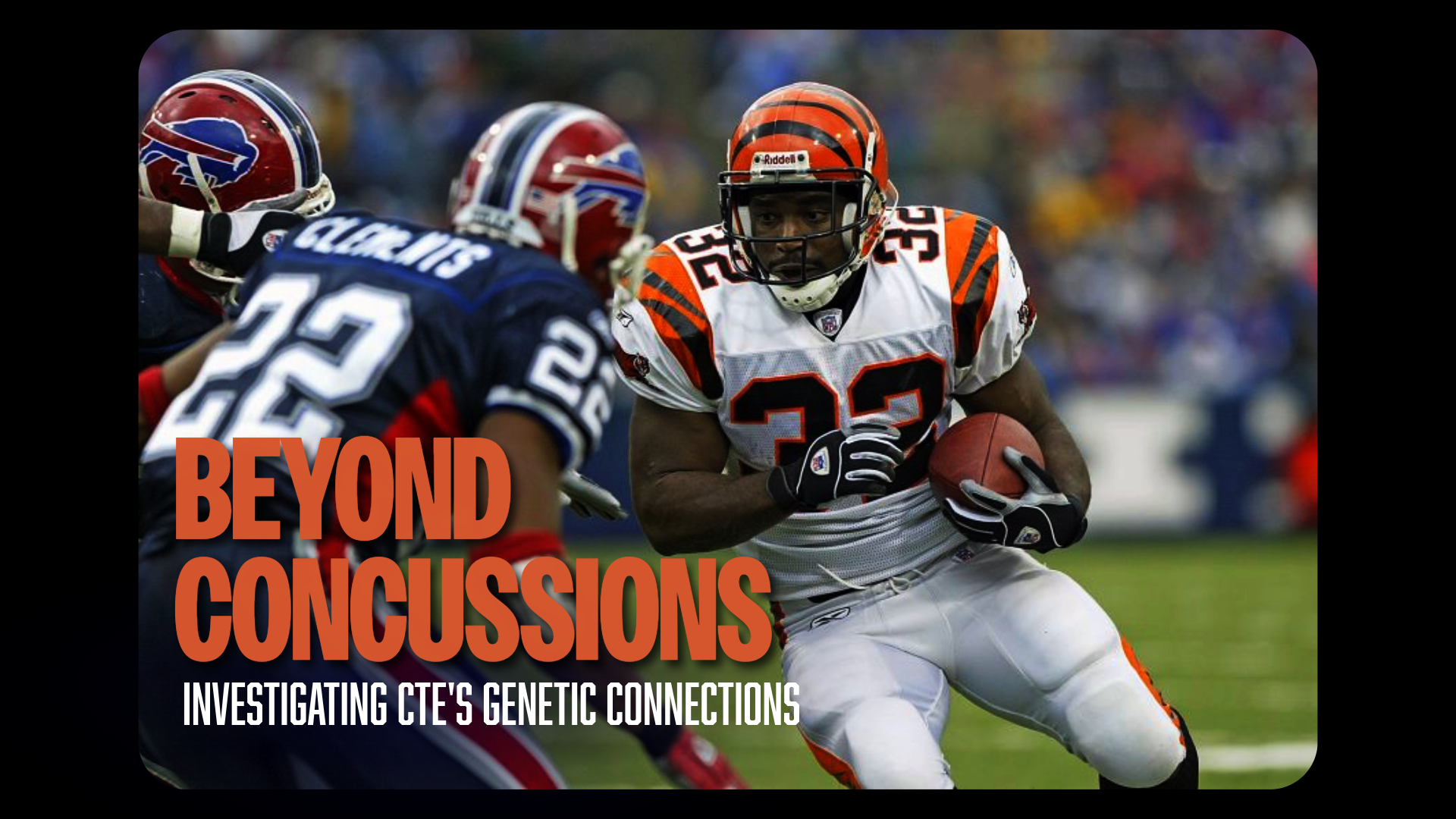
Last November, former running back for the Cincinnati Bengals, Rudi Johnson, took his own life at the age of 45. His family linked his mental health with years of repeated injuries, and his agent hoped this would spur a larger conversation about the long-term impacts of Chronic Traumatic Encephalopathy (CTE).
Johnson is one of a group of seven former and current NFL players who took their own lives last year, and one of nine who died under the age of 48 (three of those players specifically asked that their brains bestudied for CTE). The NFL has faced its fair share of scrutiny for two decades of growing evidence showing the league swept records of players with traumatic brain injuries under the rug. Now, the use of MRI and PET scans allow researchers to paint a better picture of what is happening in the brains of people with traumatic brain injuries (TBIs), even if CTE can still not be conclusively diagnosed until death. In 2026, researchers understand that the causes of CTE are more complex than just being sacked on the field when more answers lie in DNA.
CTE’s Relationship with Alzheimer’s
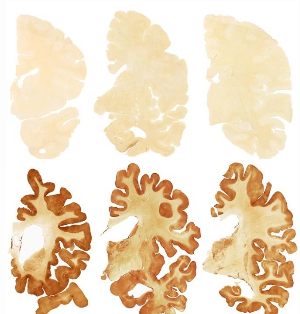
Scientists long believed CTE and Alzheimer’s pathologies were identical until a landmark study from 2019 demonstrated that abnormal protein deposits, known as tau proteins, appeared differently in both diseases. The study also found that neurofibrillary tangles,and neuritic threads, all abnormal tau protein deposits, manifested in the hippocampus for Alzheimer’s patients and the frontal cortex for CTE patients.Amid this difference, there is evidence suggesting CTE accelerates neurodegeneration and the onset of other dementias. In recent years, researchers have observed more cases suggesting patients have a combination of Alzheimer’s and CTE.
Neurodegeneration is inevitable for everyone, and many CTE symptoms mirror other dementias. The difference lies in the fact CTE isn’t showing up in 80-year-olds, it’s developing in NFL players half the age of typical dementia patients. Even though scientists are getting a better picture of CTE in living patients, not every sacked quarterback develops CTE; a growing body of genetic evidence shows why the risks are higher for some.
Developing CTE – Nature vs. “Tackle”
On the surface, it may appear that CTE is solely caused by repeated trauma to the head, and that explanation held for a long time. Why else would young, healthy athletes at the top of their leagues develop neurodegenerative symptoms typically associated with unhealthy lifestyles or advanced age? Neuroscientists have long shown that exercise, healthy diets, and mental simulation, things professional players engage in daily, greatly reduce the risk of developing dementia. So, it must be the concussions, right? Well, not entirely.
Study after study, many coming out of this center, prove carriers of certain genes are at more risk of developing frontotemporal dementia (FTD), Alzheimer’s, and other dementias. At the same time, lifestyle factors can influence the expression of those genes. While two people, both carrying key mutations in the genes APP, PSEN1, and PSEN2, are at much higher risk for Alzheimer’s disease, they may see different outcomes dependent on their health and activity levels. Researchers now understand CTE can be thought of the same way.
Several studies are showing a connection between certain genetic mutations and the development of early CTE pathology. The TMEM106B gene is associated with more extensive neurodegeneration in people with TBIs and earlier onset of CTE pathology. A paper from last October showed that between two groups of people both experiencing repeated TBIs, the group exhibiting CTE pathology had a large number of gene variants (small, missing, or extra pieces of DNA) associated with the disease. That isn’t to say the presence of such variants ensures the onset of CTE. It’s not a “yes or no”, as anyone experiencing repeated TBIs will most likely develop the disease. Rather, neurodegeneration occurs at a younger age in those with these gene variants, and its impact is more severe. The variants are the bullets, and the injuries are the trigger. So, what can be done? And how is the NFL responding to this knowledge?
Policy and Human Cost
After nearly a decade of mounting pressure, the NFL finally acknowledged the connection between the sport and CTE in 2016. That, along with a 1-billion-dollar settlement for affected players, signaled a tide change for the league. The years to come introduced new rules and devices: guardian caps, special knee pads, changes to kickoff tackles, and, most recently, guidance that players could not return to a game if knocked unconscious. Despite these changes, CTE diagnosis is trending upwards, and advocates say the changes are not enough.
Eleanor M. Perfetto, a researcher and widow of a former NFL player, posits that the League is still downplaying CTE as an epidemic. A research cohort funded by the NFL Players Association released a papercomparing suicide rates between the NFL, MLB, and NBA. The study did not find a disparity in suicide rates between the leagues but noted they had grown among NFL players since 2010. Not stopping there, researchers speculated higher CTE diagnoses and player suicides may be caused by “growing awareness” of the disease. Despite not gathering evidence of media reports around the time or polling players reasons for suicide and depression, the study walks a line between showing correlation and suggesting causation. Perfetto calls it irresponsible.
Perfetto wrote for Stat, “If the authors had simply reported the statistical finding of a rise in suicides and concluded it is likely related to CTE but hard to say because of the limitations, I wouldn’t be pushing back. That would be plausible.
Instead, they push this narrative to blame (rising suicide) on CTE awareness and other medical factors, and it’s not the first time they have done it.”
Perfetto argues, in agreement with incoming research, that the biggest causes of neurodegeneration in players are repeated small traumas, not a few blackout concussions. The league doesn’t currently have guidance to minimize repetitive injuries.
What is more concerning is the trickle-down effect of NFL policy. College, high school, and Little League sports have far fewer resources. Special equipment, on-field neurology experts, and consistent health checkups are not a reality for the hundreds of thousands of boys playing football every fall. If the NFL isn’t at least working on rule changes to avoid TBIs at every turn, CTE could, if not already, be an epidemic across America.
Genomic Opportunity
How can public knowledge of the connection between genes and dementia inform sports policy? A start could look like genetic testing for players to determine if they are predisposed to early-onset dementia or CTE. Understanding predisposition risk could help inform players of their risk and allow them to work with their healthcare team to develop a monitoring plan if they continue to play the sport. This could prove especially helpful as more genetic variants are found.
Other pressing questions linger. Even with knowledge of predisposition, how many young hopefuls would pass on the opportunity to go pro? The league is one of the most selective clubs in the world. With endless opportunity and fame, does the reward outweigh the risk?
One thing is certain: scientists, advocates, and stakeholders need to be on the same page to address what could be a growing public health crisis.
References and Further Reading
Dallmeier, J. D., Meysami, S., Merrill, D. A., & Raji, C. A. (2019). Emerging advances of in vivo detection of chronic traumatic encephalopathy and traumatic brain injury. The British journal of radiology, 92(1101), 20180925. https://doi.org/10.1259/bjr.20180925
Dong et al. (2025) Diverse somatic genomic alterations in single neurons in chronic traumatic encephalopathy. Science390. DOI:10.1126/science.adu1351
Grashow R, Konstantinides N, Anderson BC, et al. (2026). Participation in Professional American-Style Football and Suicide Mortality: 1979–2019. Journal of Neurotrauma. doi:10.1177/08977151251408496
Karagas, N., Young, J. E., Blue, E. E., & Jayadev, S. (2025). The Spectrum of Genetic Risk in Alzheimer Disease. Neurology. Genetics, 11(1), e200224. https://doi.org/10.1212/NXG.0000000000200224
Perfetto, E. M. (2026). As a scientist and NFL widow, I am furious about a recent NFL Players Association-funded CTE study. STAT. https://www.statnews.com/2026/02/07/super-bowl-cte-nflpa-study-critique-awareness-football-players-suicide/
Vink, R., & Corrigan, F. (2022). Chronic traumatic encephalopathy: genes load the gun and repeated concussion pulls the trigger. Neural regeneration research, 17(9), 1963–1964. https://doi.org/10.4103/1673-5374.335147
Zirin, D. (2025, November 18). Sports media has forgotten about CTE even after player deaths. The Nation.